

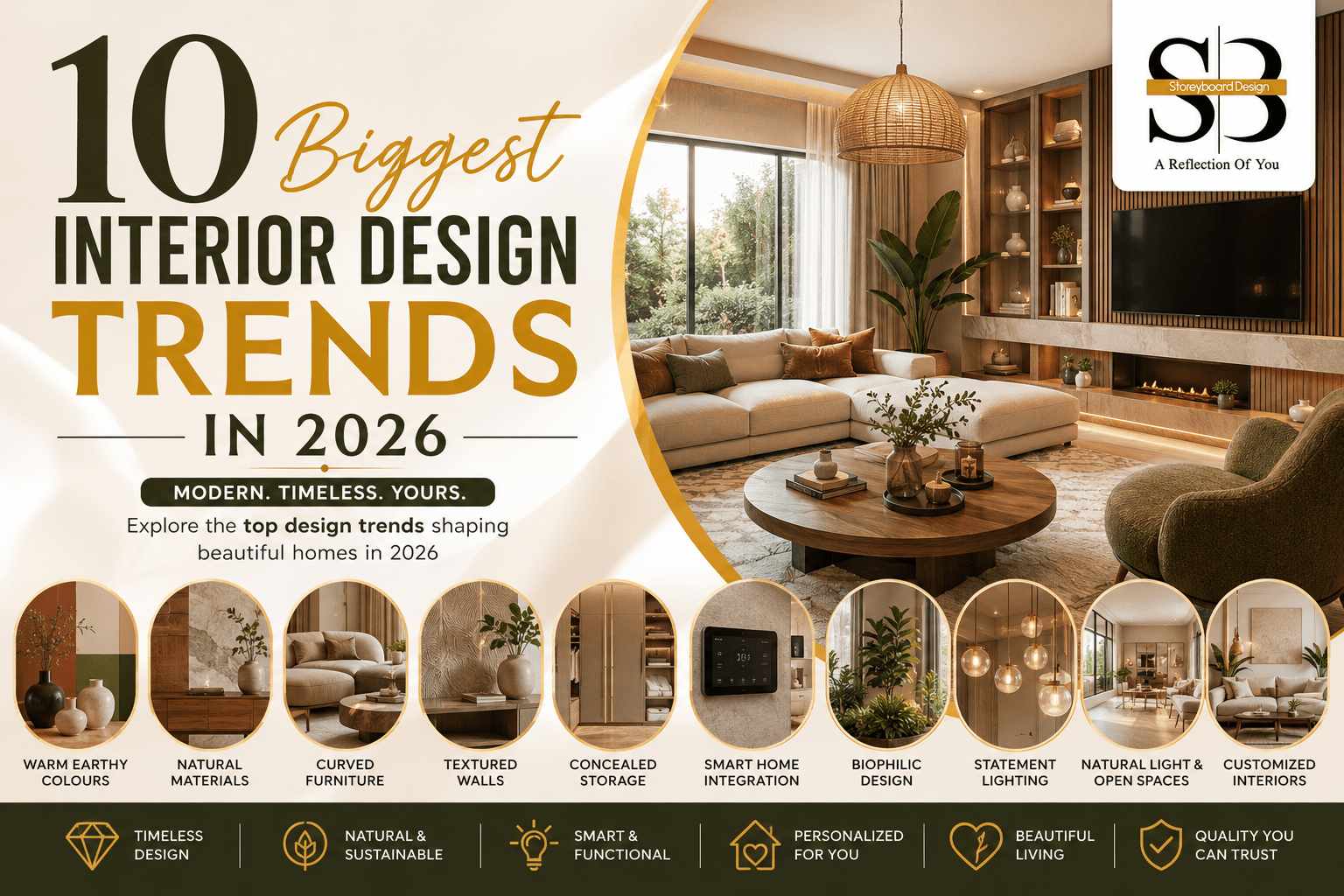
10 Biggest Interior Design Trends in 2026 🏡
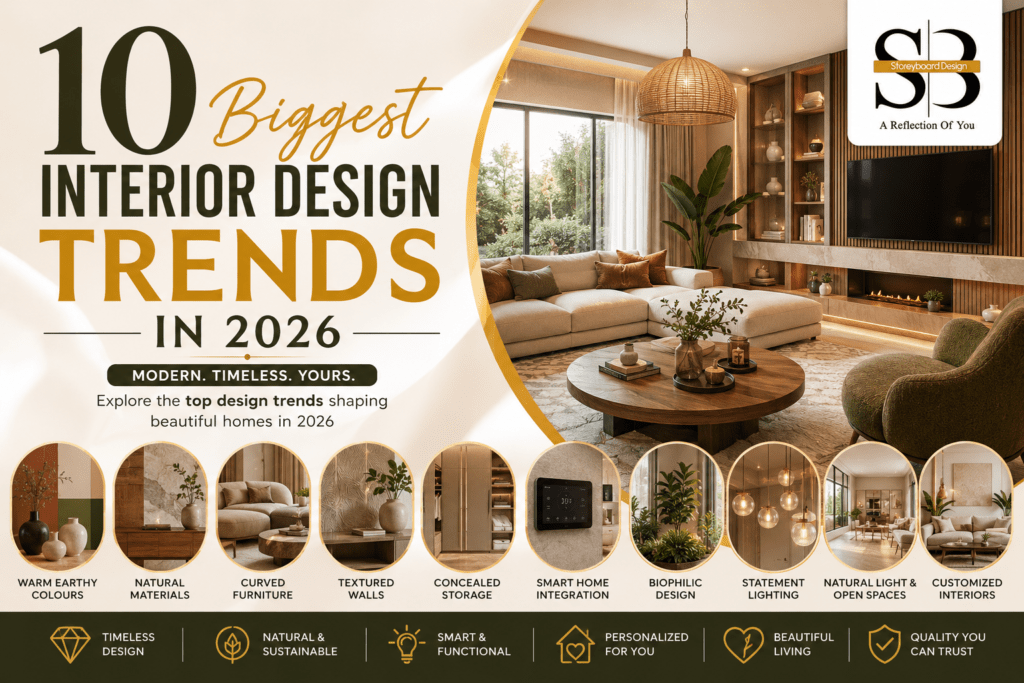
Interior design in 2026 is moving beyond perfectly styled rooms and short-lived aesthetics. Today, homeowners want spaces that feel warm, comfortable, functional, personal, and timeless.The biggest interior design trends in 2026 reflect this change.
Instead of relying only on white walls, sharp furniture, and minimal decoration, designers are introducing earthy colours, natural materials, curved forms, layered textures, smart technology, greenery, and customized details.
In fact, current design coverage shows a growing preference for interiors that feel lived-in, tactile, and connected to nature rather than overly polished or sterile.
Whether you are planning a complete home makeover or simply want to refresh your living room, these 10 trends can help you create a home that looks modern while remaining practical for everyday life.
1. Warm and Earthy Colour Palettes
One of the biggest changes in 2026 is the move toward warmer colours.
For several years, cool grey, bright white, and highly neutral interiors dominated modern homes. Now, homeowners are increasingly choosing colours that make a room feel warmer and more inviting.
Popular shades include:
- Terracotta
- Olive green
- Warm beige
- Sand
- Mustard
- Chocolate brown
- Clay
- Rust
- Deep blue
- Soft cream
These colours can make even a minimalist room feel more comfortable without making it look crowded.
For example, instead of painting an entire living room bright white, you could use a warm beige base with terracotta cushions, wooden furniture, and olive-green accessories.
You do not necessarily need to repaint your entire home. Even small changes, such as curtains, rugs, cushions, artwork, or accent chairs, can introduce warmer tones.
For Indian homes, earthy colours can work particularly well because they complement natural wood, stone, brass, cane, jute, and traditional decorative elements. Current Indian design forecasts are also highlighting terracotta, sage, mustard, teak, and other deeper natural tones.
Tip: Choose one dominant warm colour, one neutral, and one accent shade instead of mixing too many colours.
2. Natural Materials Take Centre Stage
Another major interior design trend in 2026 is the increasing use of natural and organic materials.
Homeowners are becoming more interested in materials that provide visual warmth and tactile character. Instead of making every surface look perfectly uniform, designers are allowing materials such as wood, stone, clay, linen, cane, jute, and plaster to become part of the design.
Natural materials can be used in almost every room.
In the living room, consider wooden furniture, stone-top tables, woven rugs, or linen upholstery.
In the kitchen, natural wood finishes can soften contemporary cabinetry.
In bedrooms, linen curtains, wooden bedside tables, cane details, and textured fabrics can create a relaxed atmosphere.
Natural stone, limewash, plaster, raw timber, clay, and other tactile materials are particularly prominent in 2026 design coverage.
The biggest advantage is that these materials can add character without relying heavily on decoration.
Tip: Mix materials rather than using only one. Wood combined with stone, fabric, metal, and greenery can create a much richer interior.
3. Curved Furniture and Soft Shapes
Straight lines are no longer the only way to create a modern interior.
Curved sofas, rounded coffee tables, arched doorways, circular mirrors, curved kitchen islands, and sculptural chairs are becoming increasingly popular.
Why?
Because curves can make a space feel softer and more welcoming.
A large rectangular sofa can sometimes make a living room feel rigid. A curved or rounded sofa, however, can create a more relaxed visual flow.
Curves can also be useful in smaller homes. Rounded furniture can help reduce the visual heaviness created by too many sharp corners.
In 2026, curves are moving beyond furniture and appearing in architectural details as well. Indian design forecasts are highlighting arched walkways, rounded shelving, curved kitchen islands, and softer architectural forms.
You don’t need to redesign your entire home to try this trend.
Start with:
- A rounded coffee table
- A curved accent chair
- An arched mirror
- A circular dining table
- A sculptural lamp
Tip: Use curves selectively. One or two statement pieces can be enough to soften a room.
4. Textured Walls and Tactile Finishes
Plain painted walls are being replaced by walls with more personality.
Textured walls can add depth, character, and visual interest without requiring excessive furniture or decoration.
Popular options include:
- Limewash finishes
- Microcement
- Fluted panels
- Textured paint
- Decorative plaster
- Stone finishes
- Wallpaper
- Wooden wall panels
- Hand-finished surfaces
The goal isn’t necessarily to make a wall look dramatic. Instead, texture can create subtle layers that make a room feel richer.
For example, a warm beige limewash wall behind a sofa can become a beautiful backdrop without requiring a large piece of artwork.
Similarly, wooden wall panels behind a television unit can add warmth while helping the TV area feel integrated into the room.
Tip: If you have a small room, use texture on one feature wall rather than covering every surface.
5. Concealed and Smart Storage
Beautiful interiors are not only about appearance. They also need to work efficiently.
That is why concealed storage is becoming an important part of modern home design.
Homeowners want their belongings accessible without allowing clutter to dominate the room.
This has resulted in greater interest in:
- Floor-to-ceiling wardrobes
- Hidden cabinets
- Built-in storage
- Storage beds
- Concealed kitchen appliances
- Multi-purpose furniture
- Hidden charging stations
- Built-in study storage
- TV units with closed compartments
This trend is particularly useful for apartments where space is limited.
Instead of adding another standalone cabinet, designers can integrate storage directly into the architecture.
For example, a full-height wardrobe can use the entire vertical space of a bedroom. A window seat can include drawers underneath. A TV unit can combine display shelves with closed storage.
The result is a cleaner-looking home without sacrificing functionality.
Tip: Before buying storage furniture, identify what you actually need to store. Good storage begins with understanding your lifestyle.
6. Smart Home Integration
Technology is becoming a natural part of interior design.
However, the 2026 approach is not about filling your home with gadgets. Instead, smart technology is being integrated discreetly so that it improves everyday convenience.
Smart home features can include:
- Automated lighting
- Smart switches
- Motorized curtains
- Smart locks
- Security systems
- Temperature controls
- Voice-controlled devices
- Energy monitoring
- Automated appliances
The best smart-home design is often the one you barely notice.
For example, instead of installing multiple visible devices, technology can be incorporated into cabinetry, walls, ceilings, and lighting systems.
Smart lighting can also create different moods. You might use bright lighting while working and softer ambient lighting during the evening.
Tip: Plan electrical points, switches, charging locations, and automation during the interior design stage rather than adding them after the project is completed.
7. Statement Lighting Becomes a Design Feature
Lighting is no longer simply something you install so that you can see.
In 2026, lighting itself is becoming an important decorative element.
Large pendant lights, sculptural chandeliers, wall sconces, decorative lamps, and layered lighting can completely change the mood of a room.
Instead of relying on one bright ceiling light, consider combining:
Ambient lighting: General illumination for the room.
Task lighting: Focused light for activities such as reading, cooking, or working.
Accent lighting: Lighting that highlights artwork, shelves, architectural features, or decorative objects.
This layered approach makes interiors feel more sophisticated.
A statement pendant above a dining table can become a focal point. A pair of wall sconces can add warmth to a bedroom. Under-cabinet lighting can make a kitchen more functional.
Tip: Don’t choose lighting only based on appearance. Consider brightness, colour temperature, placement, maintenance, and energy consumption too.
8. Biophilic Design and Bringing Nature Indoors
The connection between nature and interior spaces continues to influence home design in 2026.
Biophilic design focuses on bringing natural elements into the home through plants, daylight, natural materials, organic forms, views of greenery, and nature-inspired colours.
This can be especially valuable in urban homes where outdoor space may be limited.
Simple ideas include:
- Indoor plants
- Vertical gardens
- Large windows
- Natural wood
- Stone surfaces
- Green and earthy colours
- Natural fabrics
- Indoor-outdoor visual connections
You don’t need to turn your home into a jungle.
A few carefully selected plants can create a strong visual impact.
For example, a large indoor plant beside a sofa can soften a living room. Smaller plants can be placed on shelves or balconies. A vertical garden can become a feature wall where space allows.
The growing interest in living walls and nature-led interiors also reflects this broader movement toward bringing greenery and natural experiences into urban homes.
Tip: Choose plants according to the natural light available in your home. A beautiful plant that cannot survive in its location will quickly become a maintenance problem.
9. Natural Light and Open, Flexible Spaces
Natural light remains one of the most valuable design elements.
A well-lit home can feel larger, brighter, and more welcoming. Therefore, designers are increasingly considering window placement, lighter finishes, reflective surfaces, and furniture positioning when planning interiors.
Instead of blocking windows with heavy furniture, arrange the room to allow daylight to travel through the space.
Mirrors can also help reflect available light.
Another important development is the rise of flexible spaces.
A room may need to function as a home office during the day and a guest room at night. A dining area might also become a workspace. A balcony may function as a reading corner, garden, or relaxation area.
This is especially important for urban apartments where every square foot matters.
Tip: Think about how each room will be used throughout the day rather than assigning only one purpose to every space.
10. Customized Interiors That Reflect Your Lifestyle
Perhaps the most important interior design trend in 2026 is personalization.
Instead of copying a showroom, Pinterest board, or social media trend exactly, homeowners are increasingly looking for interiors that reflect who they are.
This means asking practical questions:
- How does your family use the living room?
- Do you work from home?
- Do you cook frequently?
- Do you need more storage?
- Do you entertain guests often?
- Do you have children or pets?
- Which colours make you feel comfortable?
- What objects have emotional value to you?
The answers should influence the design.
For example, a family that frequently entertains guests may need a larger dining area and flexible seating.
Someone who works from home may need an ergonomic workspace with good lighting and acoustic considerations.
A family with young children may prioritize durable materials, rounded furniture, and easy-to-clean surfaces.
This shift toward personality is also reflected in current design coverage, which increasingly favours rooms with character, mixed textures, meaningful objects, and spaces that feel collected rather than mass-produced.
Your home should not simply look beautiful in photographs.
It should feel right when you live in it.
How to Use 2026 Interior Design Trends Without Making Your Home Look Dated
Following trends doesn’t mean you need to redesign your entire home every year.
In fact, the smartest approach is to combine timeless foundations with current design elements.
For example, choose high-quality flooring, cabinetry, wardrobes, and major furniture pieces that you can live with for many years.
Then introduce trends through easier-to-change elements such as:
- Cushions
- Rugs
- Curtains
- Artwork
- Decorative lighting
- Plants
- Accent chairs
- Wall colours
- Decorative accessories
This approach gives you flexibility.
If a particular colour becomes outdated after a few years, you can change the accessories without replacing your entire interior.
What Makes a Home Truly Timeless in 2026?
A timeless home is not necessarily a completely neutral home.
Instead, it is a home where design decisions have a purpose.
Use durable materials. Choose colours that you genuinely enjoy. Prioritize comfortable furniture. Create enough storage. Bring in natural light. Make technology practical. And most importantly, design around the way you actually live.
The best interiors aren’t always the ones following every trend.
They are the ones that continue to feel comfortable and relevant years after the trend disappears.
Final Thoughts
The 10 biggest interior design trends in 2026 show a clear movement toward warmer, more personal, functional, and nature-inspired homes.
Warm earthy colours are replacing overly cool palettes. Natural materials are adding authenticity. Curved furniture is softening interiors. Textured walls are creating depth. Concealed storage is making homes more organized, while smart technology is improving convenience.
At the same time, statement lighting, biophilic design, natural daylight, and personalized layouts are helping homeowners create spaces that are not only attractive but also meaningful.
The biggest lesson is simple: don’t design your home just to follow a trend—design it to support your lifestyle.
Use 2026 trends as inspiration, then adapt them to your space, budget, family, and personality.
After all, the most beautiful home is one that feels like a reflection of you. 🏡✨
Looking for more interior design inspiration, practical home ideas, and expert tips? Explore the Storeyboard Design Blog for more ideas to create a beautiful and functional home.

Leave a Reply